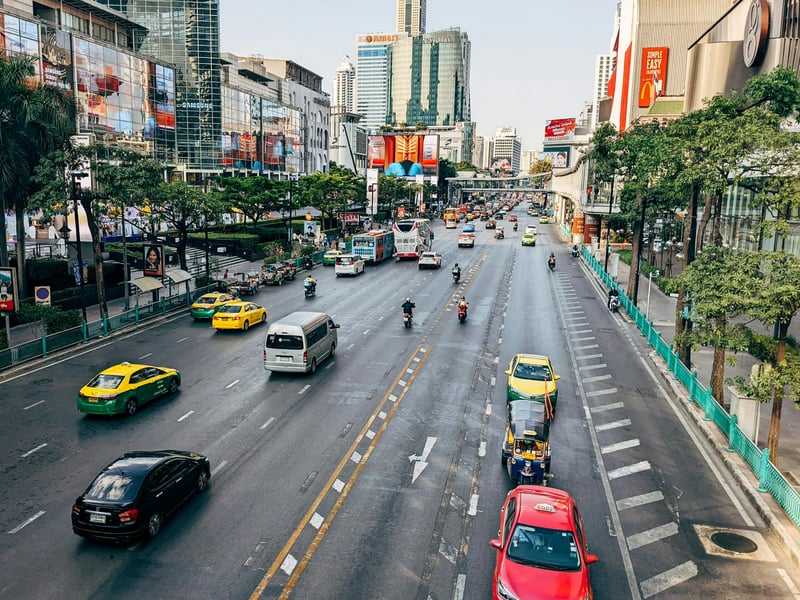
Cracking the Code: Your Guide to the Meaning Behind Thailand's Roads, Places, and Villages
Navigating Thailand can feel like deciphering an ancient code. You find yourself on a long, bustling "Thanon," then turn onto a quiet "Soi," looking for an address at "Moo Baan" 7. For the uninitiated, these terms are confusing markers. But for those in the know, they are a direct portal into the heart of Thai culture, history, and daily life. Every name tells a story, from the grandest avenue to the smallest alley.
This guide is your key to cracking that code. We'll explore the fundamental building blocks of Thai addresses and place names, uncovering their literal meanings, their pronunciations, and the fascinating lore hidden in plain sight.
The Essential Lexicon of Thai Places
To understand Thailand's geography is to understand its language. Let's start with the basics you'll encounter every day.
Thanon (ถนน)
- Pronunciation: tà-nŏn
- Thai Script: ถนน
- The Lore: This is the Thai word for "road" or "street." You'll see it abbreviated as "Th." on every street sign. The word itself evokes a sense of a paved or constructed pathway, distinct from a natural trail. Historically, thanons were the main arteries connecting cities and important towns, often built by royal decree. An interesting facet of Thai culture is the practice of naming major thanons after revered kings, queens, and national heroes. This isn't just for navigation; it's a daily act of remembrance and respect. You'll also find thanons named after nearby cities or provinces (e.g., Thanon Phetchaburi), indicating the direction the road leads.
Soi (ซอย)
- Pronunciation: sŏy (like "soy" sauce)
- Thai Script: ซอย
- The Lore: A soi is a side street or alley branching off a main thanon. Think of a thanon as a tree trunk and the sois as its branches. The addressing system is logical: Soi 1 is closest to a designated starting point (often a major landmark like a river or plaza), with numbers increasing as you go further. But here's where it gets fun: many sois also have names, which are often more commonly used than their numbers. These names can reveal the history of the area. For instance, a soi named after a temple (wat) means there's likely a temple down that lane. Others might be named after a prominent family that once lived there or a local business that defined the community.
Moo Baan (หมู่บ้าน)
- Pronunciation: moò bâan
- Thai Script: หมู่บ้าน
- The Lore: This is the term for a "village" or a modern "housing estate." Moo means "cluster" or "group," and baan means "house" or "home." In rural areas, a Moo Baan is a traditional village. In cities, it refers to a gated community or a collection of houses and villas. Each Moo Baan is assigned a number (Moo Baan 1, 2, 3, etc.) for administrative purposes. The sense of community within a Moo Baan is very strong, often with a shared spirit house, a village headman (phu yai baan), and local festivals, preserving the village feel within an urban sprawl.
Tambon (ตำบล) & Amphoe (อำเภอ)
- Pronunciation: tam-bon & am-per
- Thai Script: ตำบล & อำเภอ
- The Lore: These are the Thai equivalents of subdistricts (tambon) and districts (amphoe). They are crucial administrative divisions. A country is made up of provinces (changwat), which are divided into amphoe, which are further subdivided into tambon. You might not use these terms to give a taxi driver directions, but you'll see them on official addresses. The lore here is deeply historical; many amphoe names date back centuries to ancient city-states (mueang). For example, Amphoe Mueang (e.g., Mueang Chiang Mai, Mueang Nakhon Ratchasima) always refers to the central, often original, district of the province.
Wat (วัด)
- Pronunciation: wát
- Thai Script: วัด
- The Lore: A Wat is a Buddhist temple-monastery, the cornerstone of Thai spiritual and community life. The names of Wats are incredibly significant. They often include Pali or Sanskrit words and royal titles. Common prefixes and suffixes include:
- Wat Mahathat: "Great Relic," indicating the temple houses important Buddha relics.
- Wat Ratcha- or Wat Raja-: "Royal Temple," denoting a temple built under royal patronage.
- Wat Bowon: "Temple of the Auspicious," another marker of royal connection.
- -aram or -wart: Meaning "garden" or "monastery."
The lore is that by studying a temple's name, you can often deduce its age, importance, and who was involved in its founding.
Sanam (สนาม) & Lan (ลาน)
- Pronunciation: sà-năam & laan
- Thai Script: สนาม & ลาน
- The Lore: Both words translate to "field" or "ground," but with a subtle difference. Sanam typically refers to a large, organized field or stadium (e.g., Sanam Luang - the "Royal Field" in Bangkok). Lan is more often used for a smaller, open plaza or courtyard, like the area in front of a building or a public square. These spaces are central to public life, hosting markets, ceremonies, and gatherings.
Talat (ตลาด)
- Pronunciation: tà-làat
- Thai Script: ตลาด
- The Lore: This means "market." A place named Talat [Something] is almost always a market area. The lore behind market names is wonderfully direct. Talat Nam is a "water market." Talat Or (Talat Ao) is a "wet market" selling fresh produce and meat. Talat Yai is a "big market," and Talat Lek is a "small market." These names are purely functional and tell you exactly what to expect.
Hat (หาด) & Doi (ดอย)
- Pronunciation: hàat & doy
- Thai Script: หาด & ดอย
- The Lore: These words reveal Thailand's diverse geography. Hat means "beach." Any place with Hat in its name is a coastal destination (e.g., Hat Rin on Koh Phangan). Doi, a word from the Northern Thai language, means "mountain" or "hill." It's the prefix for almost every major mountain in the north, including the revered Doi Inthanon, Thailand's highest peak. The use of Doi instead of the Central Thai Khao (เขา) for hill immediately signals a location is in the northern region.
The Stories Behind the Signs: 20 Popular Thai Roads & Places
Now that we understand the vocabulary, let's explore the epic stories, tributes, and quirks behind some of Thailand's most famous thoroughfares and populated places.
Major Roads & Thoroughfares
- Thanon Sukhumvit (ถนนสุขุมวิท)
- Lore: Named after Phra Phisan Sukhumvit, a former Director-General of the Department of Highways who oversaw the construction of this and other major roads in the 1930s. It's one of the longest roads in Thailand, stretching from the heart of Bangkok all the way to the Cambodian border. The Bangkok section is a microcosm of the city's modern identity, known for its skyscrapers, luxury malls, and bustling expat communities along its many sois.
- Thanon Silom (ถนนสีลม)
- Lore: The name "Silom" comes from the words Si (tiger) and Lom (wind), translating poetically to "Windmill." In the past, the area was a sugar cane field with windmills for processing. It transformed into a financial hub in the 20th century and is now home to the Patpong nightmarket, representing a fascinating blend of high finance and notorious nightlife.
- Thanon Ratchadaphisek (ถนนรัชดาภิเษก)
- Lore: This name means "Celebration of the Accession to the Throne." It was built to commemorate the 25th anniversary of King Bhumibol Adulyadej's (Rama IX) accession in 1996. The road is a massive ring road that helped alleviate Bangkok's notorious traffic, making it a practical monument to a beloved king.
- Thanon Khao San (ถนนข้าวสาร)
- Lore: "Khao San" literally means "milled rice." In the old days, this street was a major hub for rice trading. There was no lore predicting its future; it organically transformed from a rice market into the world-famous backpacker ghetto it is today, a place where budget travelers from across the globe converge.
- Thanon Charoen Krung (ถนนเจริญกรุง)
- Lore: Meaning "Prosperity of the City," this is a road of immense historical significance. Commissioned by King Mongkut (Rama IV) in 1861, it was the first paved road in Thailand, built after Western diplomats and merchants complained about the lack of proper streets in Bangkok. It was designed to modernize the city and facilitate trade.
- Thanon Phahonyothin (ถนนพหลโยธิน)
- Lore: Named after Field Marshal Plaek Phibunsongkhram (Pibul), whose military nickname was "Phahonphonphayuhasena." The road was originally called "Phahon" for short, which later evolved into "Phahonyothin." It is a vital artery running north from Bangkok, connecting the capital to the central and northern provinces.
- Thanon Sathon (ถนนสาทร)
- Lore: This road is named after the Sathon family, a prominent Sino-Thai business family that owned vast tracts of land in the area in the late 19th century. Chaophraya Sathon (Sathon Phanphinyo) was a key figure in developing the neighborhood, making the name a direct tribute to a local pioneer.
- Thanon Vibhavadi Rangsit (ถนนวิภาวดีรังสิต)
- Lore: This long expressway is named after Princess Vibhavadi Rangsit, a beloved royal and journalist who died in a plane crash in 1977 while traveling to visit troops on the border. Naming this critical road after her is a mark of public respect and remembrance.
- Thanon Lad Phrao (ถนนลาดพร้าว)
- Lore: A name steeped in local history. Lad means "slope" and Phrao means "tamarind." The area was once known for its tamarind orchards on a gentle slope. Despite now being a dense, urban area, the name preserves the memory of its rural, agricultural past.
- Thanon Rama I (ถนนพระรามที่ ๑)
- Lore: Part of a series of roads named after the Kings of the Chakri Dynasty. Rama I was the founder of Bangkok and the dynasty. This road passes by key landmarks like the National Stadium and Siam Square, anchoring the modern commercial center of the city to its foundational history.
Populated Places & Districts
- Bangkok (กรุงเทพมหานคร)
- Lore: Bangkok's full ceremonial name is the longest city name in the world: Krung Thep Mahanakhon Amon Rattanakosin Mahinthara Ayuthaya Mahadilok Phop Noppharat Ratchathani Burirom Udomratchaniwet Mahasathan Amon Piman Awatan Sathit Sakkathattiya Witsanukam Prasit. It translates to "The city of angels, the great city, the residence of the Emerald Buddha, the impregnable city of Ayutthaya, of God Indra, the grand capital of the world endowed with nine precious gems, the happy city, abounding in an enormous Royal Palace that resembles the heavenly abode where reigns the reincarnated god, a city given by Indra and built by Vishnukarn." Locals simply call it Krung Thep ("City of Angels").
- Chiang Mai (เชียงใหม่)
- Lore: Meaning "New City" in the Northern Thai language, it was founded in 1296 by King Mangrai to serve as the new capital of the Lanna Kingdom. The "new" city is now over 700 years old, but the name distinguishes it from the "old city," Chiang Rai, which Mangrai had founded earlier.
- Ayutthaya (พระนครศรีอยุธยา)
- Lore: The name is derived from Ayodhya, the sacred and mythical city of Lord Rama in the Hindu epic Ramayana. The kingdom, a precursor to modern Thailand, was a global powerhouse of trade and diplomacy. Its name was chosen to evoke the glory and divinity of its legendary namesake.
- Phuket (ภูเก็ต)
- Lore: The name comes from the Malay word Bukit, meaning "hill." The island was previously known as Junk Ceylon on European maps. The current Thai name is a transliteration that reflects its hilly topography. It's a reminder of the island's historical connections to the Malay world.
- Pattaya (พัทยา)
- Lore: The name likely comes from the march of Phraya Tak (later King Taksin) and his army from Ayutthaya to Chanthaburi before the fall of Ayutthaya. "Thap Phraya" means "the army of Phraya," which over time evolved into "Pattaya." It transformed from a sleepy fishing village into a major tourist destination after American soldiers started visiting for R&R during the Vietnam War.
- Hua Hin (หัวหิน)
- Lore: Meaning "Stone Head," the name comes from the rocks seen at the northern end of the beach. It became Thailand's first beach resort after King Rama VI built a royal summer palace (Klai Kangwon Palace, or "Far from Worries") here in the 1920s, setting a trend for royal and aristocratic retreats.
- Koh Samui (เกาะสมุย)
- Lore: The origin of "Samui" is unclear but could be derived from the Malay word Saboey (safe haven) or from the name of a native tree, the Mui. The island was a self-sufficient community isolated from the mainland for centuries, with its own unique culture and dialect.
- Isan (อีสาน)
- Lore: This is the name for the entire northeastern region of Thailand. The word comes from Ishaana (อีศาน), the Sanskrit name for the northeast direction and a manifestation of Shiva as the ruler of the northeast. The name reflects the historical influence of Khmer (Angkor) culture, which was deeply rooted in Hindu cosmology.
- Kanchanaburi (กาญจนบุรี)
- Lore: A Sanskrit-derived name meaning "City of Gold." The province is famous for the Bridge on the River Kwai and the Death Railway, built by Allied POWs during WWII. The beautiful, prosperous-sounding name stands in stark contrast to the dark history associated with it.
- Mae Hong Son (แม่ฮ่องสอน)
- Lore: The name means "The Basin of the Elephant Wee" – a rather unusual origin! "Mae" means mother or river, "Hong" is a basin or hollow, and "Son" is wee/urine. The lore suggests the area was a natural basin where elephants came to drink and urinate. Another theory suggests "Son" is a corruption of a Shan word for a type of bamboo trap, but the elephant story remains the most popular local legend.
Navigating with New Eyes
The next time you walk down a thanon, turn into a soi, or visit a moo baan, you'll be doing more than just navigating. You'll be reading a living map of Thai history, culture, and values. You'll understand that "Ratchadaphisek" is a royal tribute, that "Lad Phrao" was once a tamarind slope, and that a simple "Soi" name might reveal a community's forgotten past. Thailand's geography is a language in itself, and now you have the essential phrases to start a conversation with the landscape.